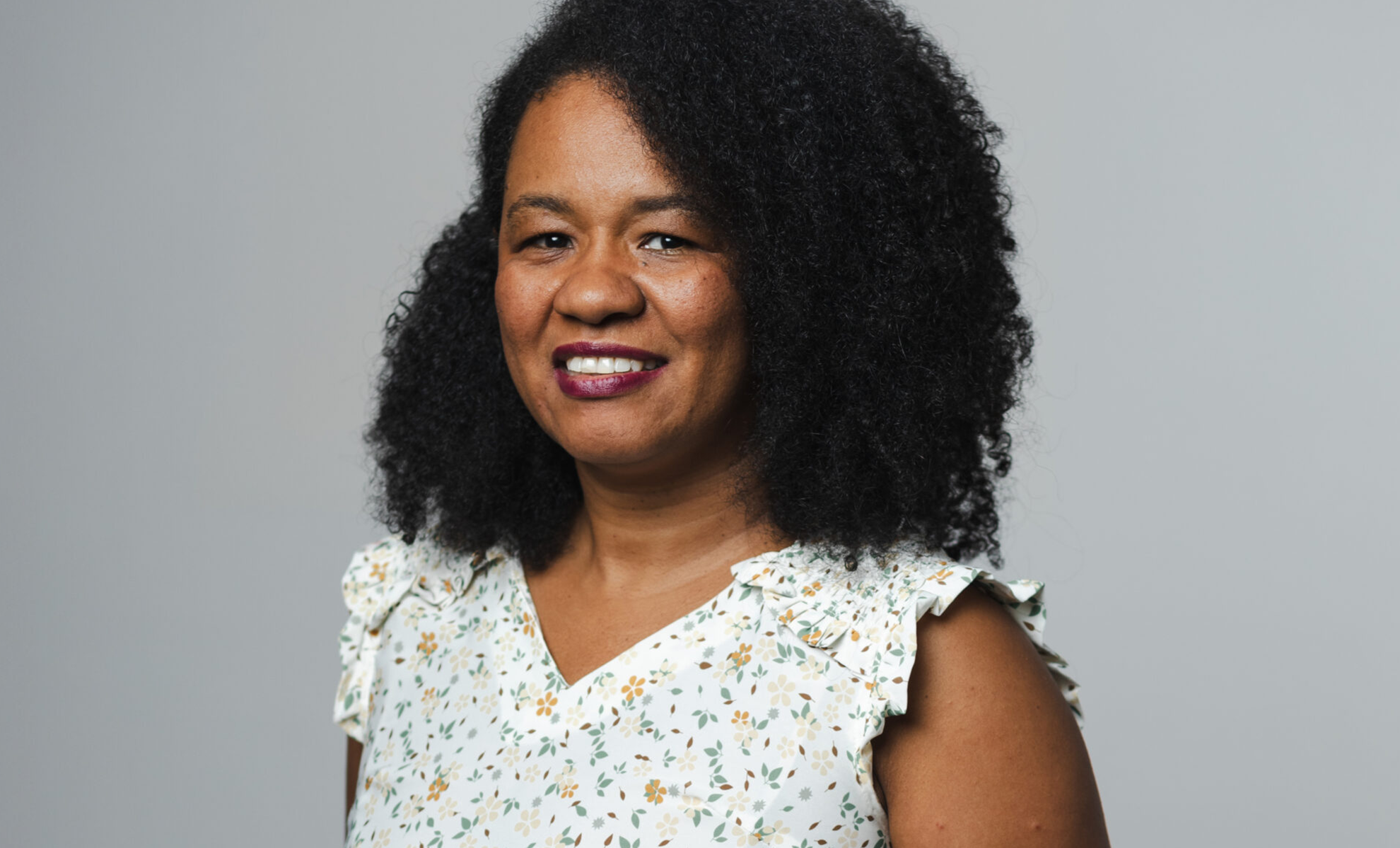
“[…] we connected around powerful calls to action. […] These voices, and so many others who shared their perspectives, reminded us of the power of local leadership and global solidarity.” Anna Lappé, Executive Director of the Global Alliance for the Future of Food
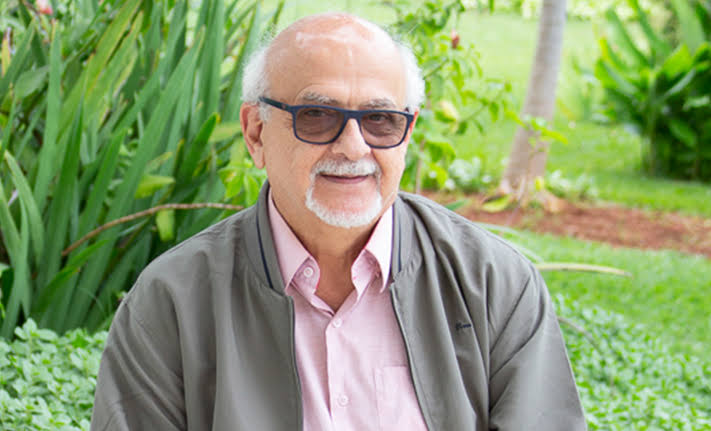
Inspired by the dialogues at the Global Convening on Food Systems Transformation, held in 2025 by the Global Alliance for the Future of Food, Anna Lappé shared her memories of the occasion in a deeply thoughtful account. Among the voices she cites is that of Carlos Monteiro, researcher and founder of Nupens/USP — Center for Epidemiological Research in Nutrition and Health at the University of São Paulo — and professor emeritus of USP’s School of Public Health.
His name has indeed become widely known both nationally and internationally, and it carries with it the reference of the Brazilian research center that changed the way foods are classified and, consequently, contributed to a transformation in the understanding of and response to systemic challenges in the food question.
Brazil is the country of origin of NOVA, a food classification recognized internationally by the WHO — World Health Organization, the FAO — Food and Agriculture Organization of the United Nations, and by governments in several countries. Developed by Nupens/USP under the leadership of professor and researcher Carlos Monteiro, the NOVA classification introduced the concept of ultra-processed foods to the world. Nearly two decades after the first appearance of the concept in a leading international scientific journal, the scientific evidence on the harms of ultra-processed foods has expanded and diversified, providing the basis for initiatives aimed at their regulation. The accumulated body of research published in globally renowned journals — The BMJ, The Lancet, American Journal of Preventive Medicine — links high consumption of ultra-processed foods to more than thirty adverse health outcomes. Even so, the current landscape is one of intense dispute in public debate, in which the NOVA classification continues to be questioned and subject to attempts at disqualification, with strong influence from the food industry.
Despite these attempts, the Brazilian local experience that has been driving possibilities for global convergence around this agenda had an important new chapter in 2025. The Lancet series on ultra-processed foods and human health, led by scientists from Nupens together with partners from Australia and Chile, reviewed robust evidence indicating that ultra-processed foods are replacing fresh and minimally processed foods in meals and are associated with an increased risk of various chronic diseases. In addition to Carlos Monteiro’s prominent participation, the articles include contributions from other researchers affiliated with the Center — Patricia Jaime (scientific coordinator), Maria Laura Louzada (deputy scientific coordinator), Renata Levy, Eurídice Steele-Martinez, Giovanna Andrade, Ana Clara Duran, Priscila P. Machado, Jean-Claude Moubarac, and Leandro Rezende.
In this interview, we spoke with Carlos Monteiro about progress, new frontiers, challenges, next steps, and the role of philanthropy in supporting conflict-of-interest-free science that is deepening the knowledge base for strengthening policies and initiatives aimed at restricting the consumption of ultra-processed foods in Brazil and around the world.
Ibirapitanga: The agenda focused on restricting the consumption of ultra-processed foods is at a moment of greater internationalization. Considering the path Nupens has traveled under your leadership, how do you assess the singular position Brazil holds — as the birthplace of this concept and of the NOVA classification, and as a country where a living laboratory of regulatory experiences in this direction is underway? How do you see this moment in which scientific production and regulation in Brazil are more intensely shaping international policies and debates?
Carlos Monteiro: The current moment reflects a longer process, in which Brazil has ended up taking on a particular role both in conceptual formulation and in the development of public policies related to ultra-processed foods. It is less a matter of leadership and more the result of a trajectory in which scientific production, social context, and institutional capacity combined to position the country as a reference in the international debate. NOVA emerged at a moment when we were seeking to answer what everyone wanted to answer: what was the cause of the rise in obesity?
This process is linked to the Brazilian context of the 2000s, marked by an accelerated epidemiological transition. It was in this context that researchers sought to interpret changes that were not fully explained by conventional models, which opened space for new approaches.
Another relevant element is that, until recently, Brazil still retained relatively strong traces of traditional dietary patterns. This contributed to ultra-processed foods being identified more clearly as a change external to existing food systems, and not as their starting point.
The production of this knowledge took place in public universities, with public funding and without ties to industry, which ensured a degree of independence that is uncommon internationally. This autonomy was decisive in allowing for a more direct analysis of the role of corporations in shaping dietary patterns and disease profiles.
Furthermore, the articulation between scientific production and public policies in Brazil in this field — largely structured around SUS — Unified Health System — favored the translation of this knowledge into concrete actions. This helps explain why the country has not only produced concepts but has also become a space for testing and implementing policies, such as dietary recommendations, regulation of institutional environments, and debates on advertising.
This accumulated experience has led Brazil and other Latin American countries to influence the global agenda more directly. The internationalization of science is more than meeting researchers from other countries or participating in events — it is about setting the research agenda at universities. And this is happening today. It is not only about the circulation of evidence, but about the dissemination of a specific way of understanding the problem.
Ibirapitanga: The expansion of scientific production on the effects of ultra-processed foods has reached a new scale, as exemplified by The Lancet series on ultra-processed foods and human health, led by scientists from Nupens and partners from Australia and Chile, which reviewed robust evidence indicating that ultra-processed foods are replacing fresh and minimally processed foods in meals and are associated with an increased risk of various chronic diseases. How do you situate this publication in Nupens’s trajectory, and what do you consider to be the fundamental highlights of the series?
Carlos Monteiro: I see this publication as the most refined consolidation of work that has been built over decades.
The Series does not emerge as a starting point, but as a moment of synthesis. It organizes a very broad set of evidence accumulated over time, presented in a coherent way, articulating different dimensions of the problem: from the characterization of ultra-processed foods and their insertion into food systems to their impacts on consumption patterns, disease profiles, and global industry dynamics.
A central aspect is precisely its collaborative nature. We are talking about an effort that brought together 43 authors from different countries, which demonstrates a capacity for coordination that has been built over the years. It is not just about adding contributions, but about being able to engage in dialogue across very different contexts, producing a shared reading of a phenomenon that is global but expresses itself in specific ways in each reality.
The publication in The Lancet also carries an important meaning. There is the recognition within the scientific sphere, but perhaps just as relevant is the series’ capacity to extend beyond that space and reach the public and political debate.
In the Brazilian case, the series helps to reinforce and add depth to debates that were already on the table, such as the discussion on the taxation of soft drinks. In this sense, it does not create the agenda, but expands its resonance and strengthens its evidence base.
Ibirapitanga: What are currently the frontiers of knowledge and science communication on this agenda where progress is still needed? How has Nupens been planning and thinking about the group’s future in connection with changes in dietary patterns around the world?
Carlos Monteiro: One of the main frontiers today lies precisely in the dispute over the production and legitimation of scientific knowledge.
The Lancet series shows how industry actively engages in the production of scientific doubt — whether by funding research, influencing agendas, or promoting framings that dilute already consolidated evidence. There is also a lot of marketing.
There is also significant resistance from researchers who are not funded by industry but who are still anchored in a more traditional view of nutrition, centered on isolated nutrients. We changed the paradigm, but it coexists with the previous paradigm of nutritionism. This is natural in the scientific process.
But, in this sense, it is also possible to identify a geopolitical and, to some extent, colonial dimension of science. The legitimacy of certain agendas and concepts is still strongly mediated by scientific production centers in the Global North. This raises an important question — if this same evidence were produced in institutions such as Harvard, would it encounter the same level of resistance?
There are relevant challenges in the field of science communication. Advancing this agenda requires not only better communicating existing evidence but also actively confronting the disinformation and conflicts of interest that permeate the public debate on food and health.
In this context, Nupens has sought to consolidate work that brings together scientific production, communication, and advocacy in public policy. Under the coordination of professor Patricia Jaime, the group remains committed to producing robust evidence on the impacts of ultra-processed foods, while working to ensure that this evidence supports decision-makers in Brazil and internationally.
One of our main studies, the NutriNet Brasil cohort, will complete six years in 2026 and serves as an umbrella for many research projects.
Ibirapitanga: In 2025, you were one of the invited speakers in a session aimed at exploring the issue of ultra-processed foods through various lenses at the Global Convening on Food Systems Transformation of the Global Alliance for the Future of Food, an alliance of foundations focused on the transformation of food systems. In our view, this moment marked an expansion of the recognition of your work and of Nupens as a reference on this agenda within the international philanthropic field. In your opinion, how can philanthropy operate decisively to support the ecosystem of research, advocacy, and communication focused on the regulatory agenda on ultra-processed foods? What positions would be strategic for philanthropy to take in the current context?
Carlos Monteiro: Funding for conflict-of-interest-free science is an essential condition for advancing this agenda. Securing independent resources is not only desirable, but foundational. It is what sustains the credibility of the evidence and the capacity to influence public policy.
In this sense, philanthropy can play a decisive role by investing in a coordinated way across three complementary fronts: research, advocacy, and communication. This integrated approach is also proposed by The Lancet series, which calls for coordinated global action.
International experiences show that broad coalitions have been fundamental to regulatory advances. These coalitions bring together diverse actors — civil society, academia, health professionals, political leaders, communicators, and philanthropies — and operate along three strategic axes. The first is research, which produces evidence, supports strategic litigation, and guides the design and evaluation of policies. The second is political advocacy, which involves stakeholder mapping, legal analysis, and engagement with decision-makers. The third is communication, with campaigns, media engagement, and social organizing to contest narratives and generate public support.
Philanthropy can strengthen this ecosystem precisely by supporting these three dimensions in a sustained and coordinated way, avoiding fragmented or short-term approaches. This includes, for example, funding independent research, supporting advocacy networks, strengthening public-interest communication, and investing in emerging leaders, such as young activists and communicators in local territories.
Institutions such as the Global Alliance for the Future of Food play an important role in promoting this articulation at the global level, connecting agendas, countries, and diverse actors. Ibirapitanga, in turn, takes on a central role in Brazil, through its entire work on the food systems axis.
Ibirapitanga: Finally, we would also like to know what your memory is of taking part in this gathering with different actors engaged in the transformation of food systems in various countries. What was it like for you to be there, and which exchanges were valuable?
Carlos Monteiro: What struck me most was precisely the diversity of actors involved and the possibility of building bridges between these perspectives. These exchanges are valuable because they allow us not only to share evidence but also strategies.
There is a collective learning that emerges when we are able to connect experiences from different countries, whether in labeling policies, marketing regulation, or coalition building.
For Nupens, which has always had work closely connected to the international debate, these spaces reinforce the importance of continuing to build knowledge in dialogue with other contexts, but also of affirming the relevance of Global South experiences in this debate.
In the end, I left with the feeling that, despite the challenges, there is a growing convergence around the need to act, and that this agenda only advances when it is built collectively.