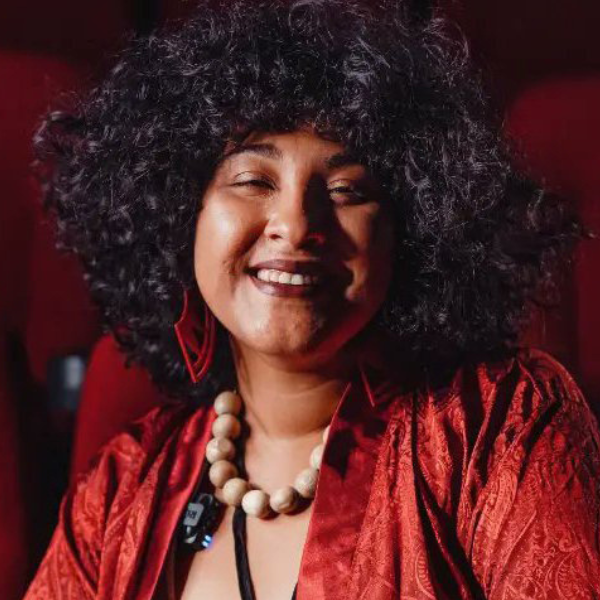
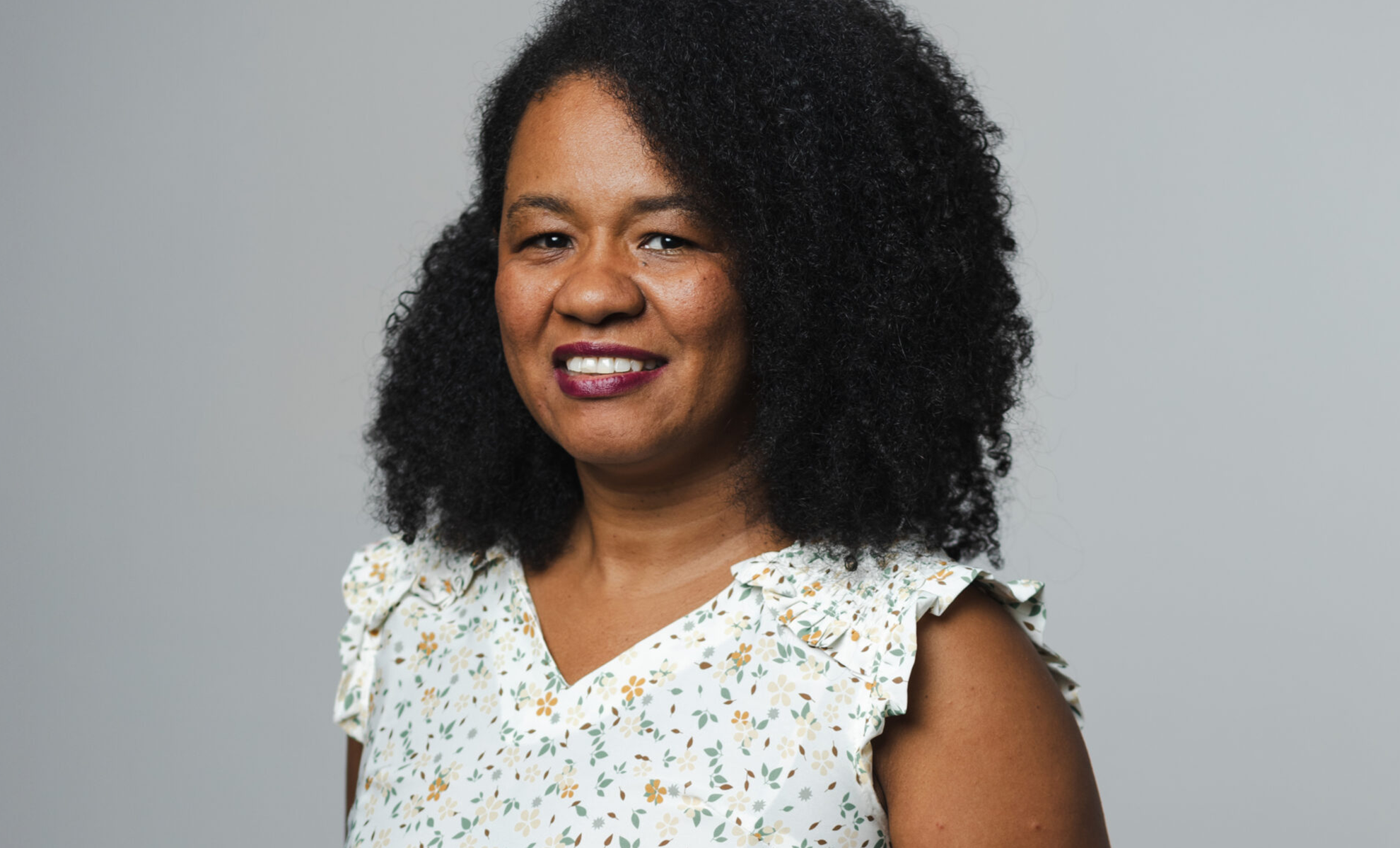
Renaya Dorea is a multidisciplinary Afro-Indigenous Brazilian artist, born in the Baixada Fluminense and based in the Região dos Lagos, in the state of Rio de Janeiro. She works in Visual Arts and Audiovisual through the self-representation of Afro-Latin memories and enchantments. Her work weaves together ancestral Black and Indigenous knowledge, the connection with territories, nature and the sacred, moving across illustration, painting, street art, animation, literature and film. She holds degrees in Film from EICTV (Cuba), in Arts and Design from UFJF, and in Expanded Photography from EAV Parque Lage, and is a member of APAN and Rede Talento Paradiso. As a designer and illustrator, she works through authorial creative processes, combining hybrid techniques of hand and digital painting with knowledge from Indigenous and Afro-Brazilian cultures, and develops artwork for projects linked to counter-colonial education. She was the first Brazilian artist in residence at Casa del Autor de Zapopan, a prestigious international artist residency in Jalisco, Mexico. She served on the jury of Sesc Argumenta in 2025, mentored projects at the 15th Brasil CineMundi, and curated the experimental films and the Latin American Panorama of the 16th Encontro de Cinema Negro Zózimo Bulbul. In 2023, she was one of the honorees of the Prêmio Pretas Potências for her contribution to Audiovisual. Her work has been shown at exhibitions and festivals such as the Havana Biennial, the International Festival of New Latin American Cinema (Havana, Cuba), COP30, Festival Nosotras Estamos en la Calle (Lima, Peru), the 8th Festival Cuórum Morelia, the 45th Festival de Cinéma de Douarnenez, the 41st Guadalajara International Film Festival (FICG), the Vitória Film Festival, the 18th Panorama Internacional Coisa de Cinema, and Ciranda de Filmes. She has carried out visual arts and illustration projects for Netflix Brasil, Facebook Business Latam, Blogueiras Negras, Instituto Afrolatinas, Folha de S.Paulo, Instituto Ibirapitanga, Editora Saraiva and Melhoramentos, among others.
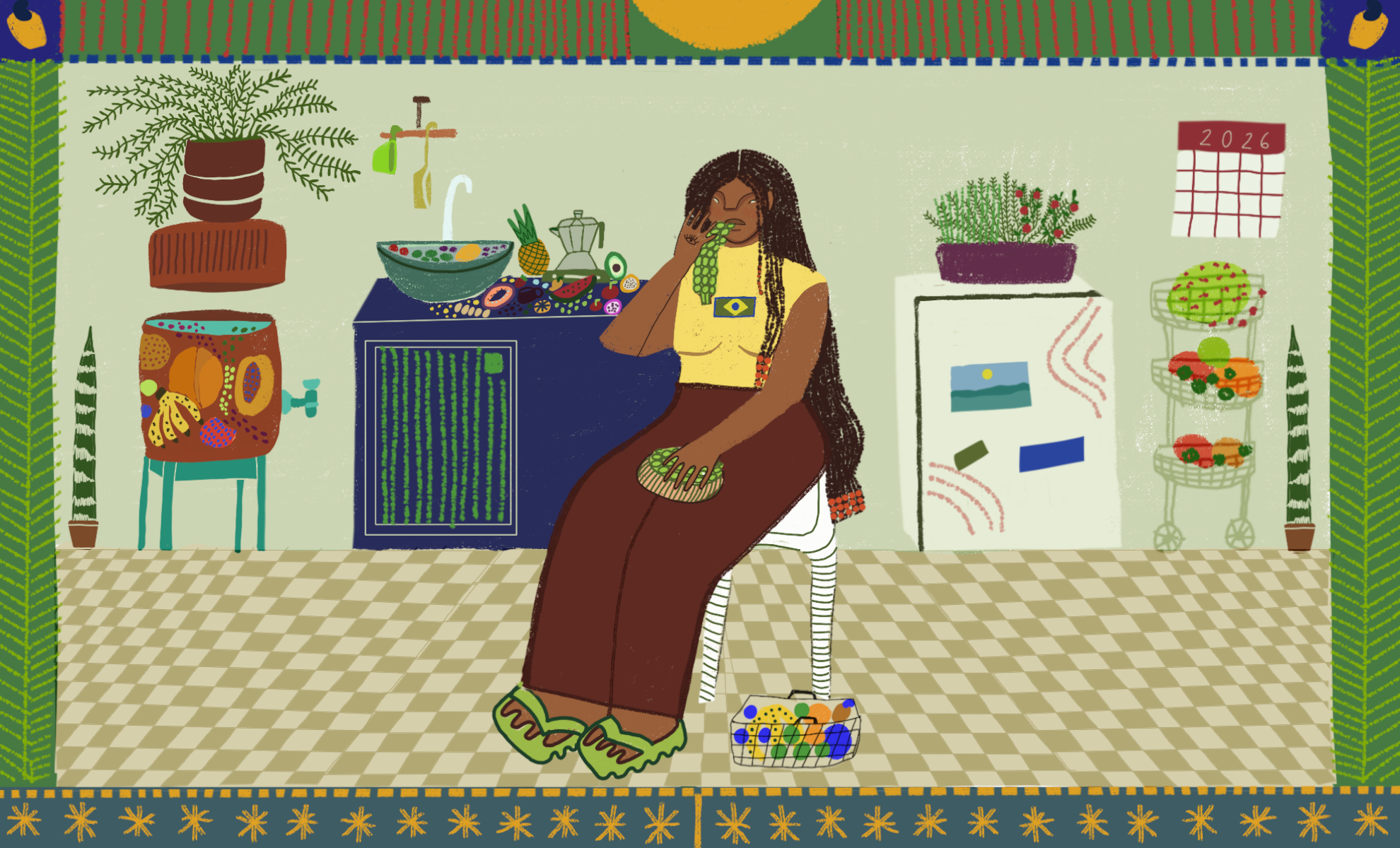
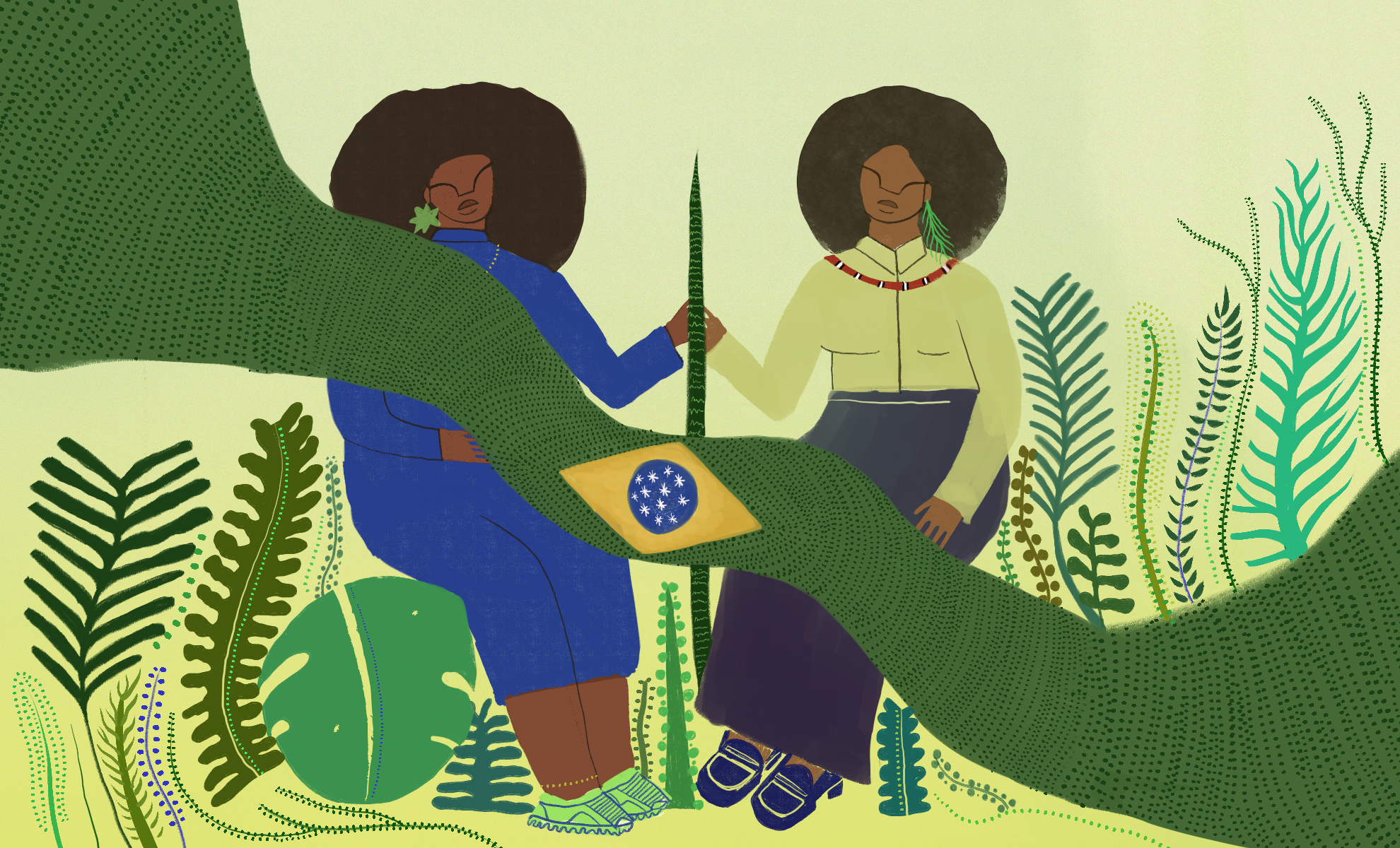
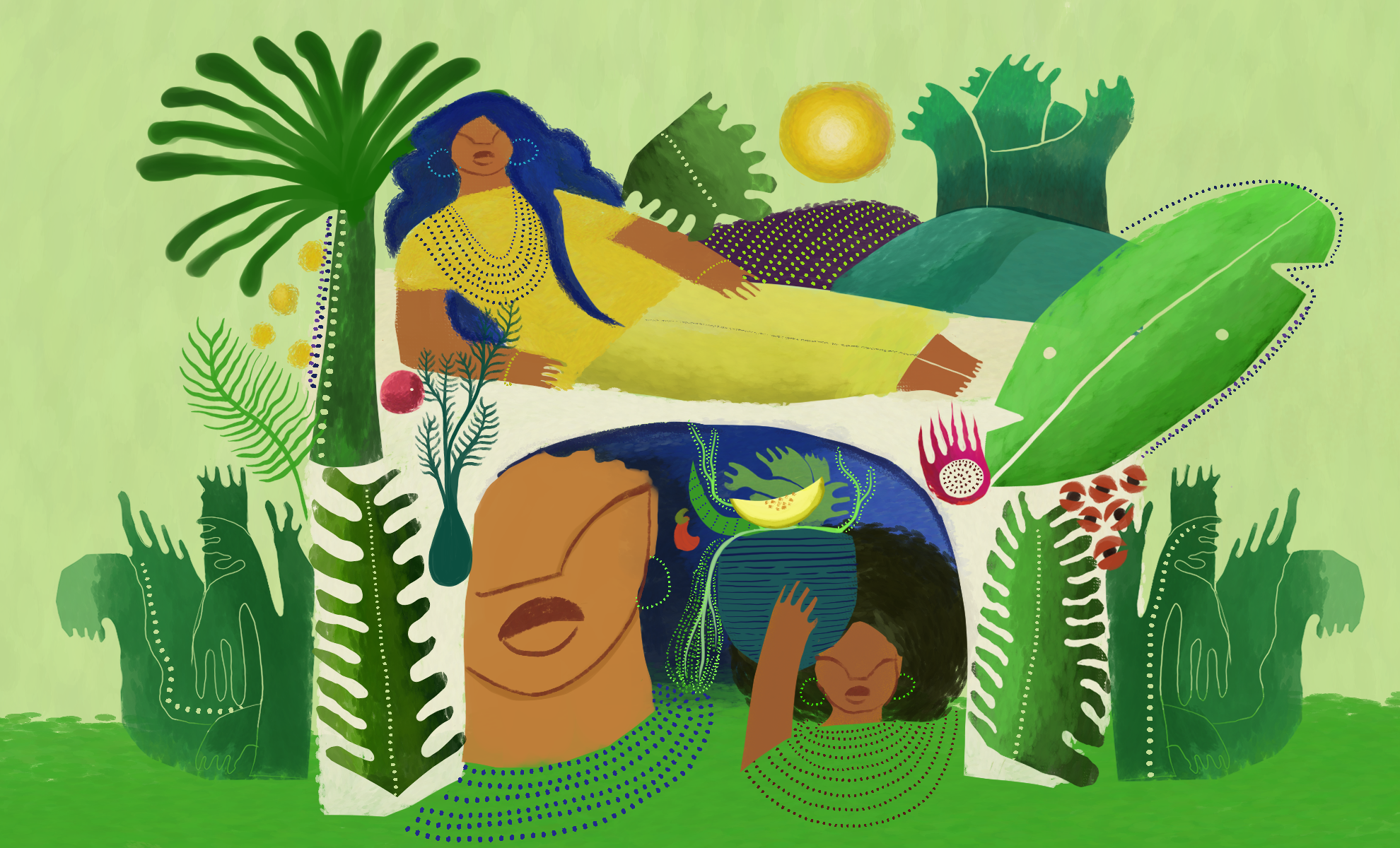
I was delighted to receive the invitation to join Instituto Ibirapitanga’s Illustration Collection, creating a series of illustrations that converge toward a female and Black imaginary of Afro-Latinities from a Brazilian perspective, bringing together elements such as the environment and sacred plants of power used in religious practices, tied to ancestral knowledge and technologies. I started drawing as a child, and throughout my path as an illustrator I began searching for the color of my grandmother’s skin in paint, realizing in the process that terracotta, the color of clay, the color of the earth, is the same color as many soils of Abya Yala and of the African diaspora. This body-territory, an expanded body, would be a mirror reflecting my own color, memory and collectivity. From there, I sought to portray women immersed in a patchwork fabric stitched between the sacred, the everyday, improvisation, the encantarias and culture, where African memory meets, at the crossroads, the Indigenous peoples of Abya Yala*.
Abya Yala*: A term used as a self-designation to rename the continent from the perspective of its Indigenous peoples, as a counterpoint to the colonial term “Latin America,” a name that pays homage to the colonizers.
Afro-Indigenous*: An identity that recognizes the bond between African peoples in diaspora and Indigenous peoples as a memory of resistance and of a culture at the crossroads.
African Diaspora*: A term referring to the non-place of people of African descent who were displaced by the human trafficking of slavery.