Despite the successful trajectories of Black elected officials, the electoral race still imposes systemic challenges on these candidacies. The barriers to Black people’s access to and permanence in spaces of power require coordinated responses, confronting racism at every point in the political ecosystem: within parties, in campaign financing, in nomination processes, and in the retention of staff and advisors.
From changes in candidacy financing rules to new party configurations, and through gender- and race-based political violence and narrative challenges, building Black political power in the country demands careful analysis and a strategic outlook.
The racial quotas approved by Brazil’s Superior Electoral Court (TSE) in 2020 and the proportional campaign financing rules produced measurable effects: for the first time, Black candidacies formed the majority in that year’s municipal elections.
However, despite significant progress, under-representation persists as a challenge, since Black people continue to hold a minority of elected municipal positions, failing to reflect their 56.2% share of Brazil’s demographics.
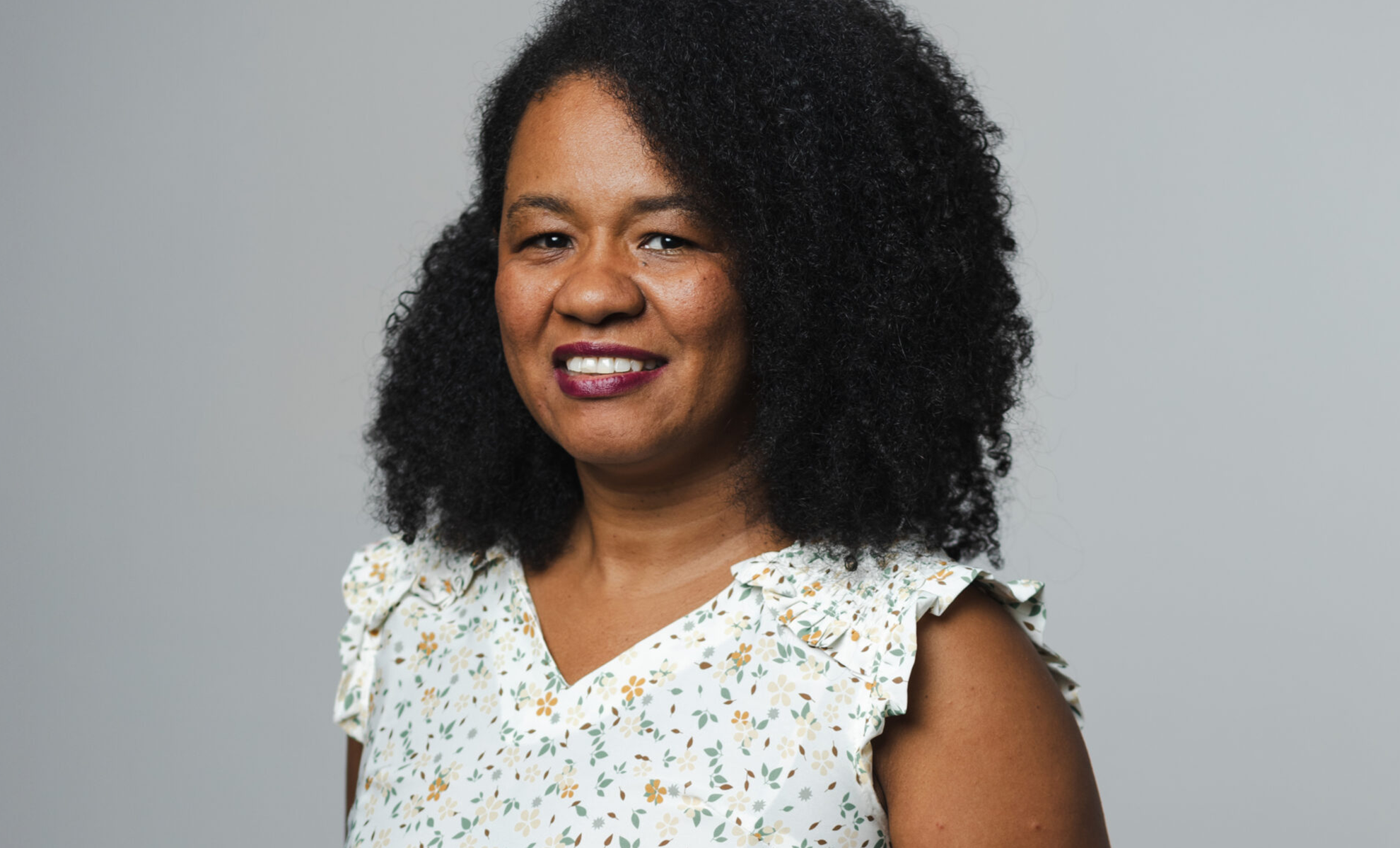
Looking at this reality in the context leading up to the 2026 General Elections, to deepen the debate and bring a perspective centered on the racial question, Ibirapitanga spoke with Flávia Rios, sociologist, professor at the University of São Paulo, and researcher at Afro Cebrap. In this interview, she assesses the 2026 electoral context, reviews the progress made in recent years and the challenges that remain, and reflects on paths toward strengthening Black political participation in the country.
Instituto Ibirapitanga: What progress and limitations marked the cycle of Black candidacies between 2020 and 2024, and what does this trajectory reveal about the challenges for the 2026 elections?
Flávia Rios: It’s important to highlight that this cycle was very significant for the public debate around campaign financing and the need for investment and for confronting inequalities in the world of institutional, legislative, and executive politics.
So the whole discussion that used to be more confined to parties, and sometimes to social movements, gained more prominence — especially the institutional discussion around financing guarantees that would create greater competitiveness for Black candidates in electoral processes.
I see this moment as a major step forward, as is the growth in the number of Black candidacies and the increased presence of this demographically representative social profile within the institutional political system. We therefore had an important increase, combined with institutional advances that provided guarantees so that both this debate and this modest improvement in the quality of representation — from the standpoint of candidate profiles — would be noticeable in this cycle.
There are challenges still to come regarding the applicability of the new electoral rules and norms that emerged from this context. That is, in practice, the guarantees and safeguards of rights — even for eligible Black candidates — to be able to run in elections, considering the distribution of financing and taking into account the rules currently in force. So I think the challenge has more to do with whether parties actually provide these guarantees.
Instituto Ibirapitanga: Do the recent changes to the financing rules for Black candidacies strengthen or weaken political representation? What are the main effects of Constitutional Amendment 133/2024 for the next electoral cycle?
Flávia Rios: We have these recent financing changes that provide guarantees for Black candidacies. They do not weaken political representation in general, nor that of these candidacies in particular; on the contrary, they attempt to correct distortions that were identified over the course of Brazil’s democratic cycle and that studies have shown: there was a very large inequality between Black and white people in the electoral process, whether in candidacy or, above all, in results.
We thus have an overrepresentation of people who self-identify as white and an underrepresentation of those who self-identify as Black. In this sense, the new financing rules had a positive effect: strengthening political representation itself, insofar as it becomes able to represent, to mirror, the social profile of Brazilians, both in ethnic-racial terms and in terms of social class, since there ends up being some reverberation across class strata. This is, therefore, an important role, and it is one of the main effects of Constitutional Amendment 133/24.
I would also like to point out that these rules — or this constitutional obligation to guarantee a kind of affirmative action, let’s call it that, for Black candidates, creating an obligation for parties to allocate 30% of resources from the Electoral Fund and the Party Fund to these candidacies — in some way lend greater stability to the effect of the rule, to this racially targeted electoral financing policy.
It stops being a rule that could be changed at any moment; instead, it gains more stability precisely because of its status as a constitutional amendment. This is very positive, because it makes it more deeply rooted in our political contract and guarantees greater legal and political force, so that the actors who are part of the competitive game take on more responsibility and commitment, since this is a rule that has gained the status of constitutional force, making it an important milestone as a constitutional amendment.
Instituto Ibirapitanga: Where are the main battlegrounds today for strengthening Black political participation: in the parties, in financing, in communication, in litigation, or in protection against political violence?
Flávia Rios: There are several important arenas when we talk about Black political participation: the arena of social movements, the arena of parties, and, within that discussion, the problem of financing — which is not solved by the constitutional amendment alone, but which gives it momentum, generates debate, guarantees, and possibilities, including the ability to compare the scenario before and after the amendment, along with the limits of its implementation. This also generates reflection on these recent challenges, among which one of the major debates is the problem of political violence — not a new topic, in fact a very old issue in Brazilian reality, but one that has taken on diverse and complex contours that deserve attention.
We see, quite strongly, the growth of political violence against women, against trans women, against Black people, in its various forms: from political violence in the digital world and threats, to attempted murders. We therefore have a set of complex situations that need to be confronted and that end up being an obstacle to the presence of certain social groups — especially women, Black women, trans women, peasant women, women living in favelas, women from certain social contexts who are more vulnerable in a context of political violence.
But it’s important to say that the main obstacle is not exactly political violence, although it is a very important phenomenon to study and reflect on, because it is, in fact, a barrier. The parties themselves, and the way they still very severely concentrate the distribution of resources, are one of the main obstacles. It is the party itself that defines the criteria for the most competitive candidacies, and in doing so ends up allocating more resources to these internally filtered candidates before they even reach voters.
It happens that, in this internal party process of deciding who receives more resources, Black people, for the most part, are often not well represented in this more select group of highly competitive candidates. So we have a party-based barrier, one rooted in party culture, in the way the internal political game within parties is structured. I see this as a major challenge.
Instituto Ibirapitanga: What is needed to build Black political power in Brazil? And what do the trajectories of successful candidacies and terms in office reveal about the conditions that make this power possible?
Flávia Rios: Politics needs to be a topic as important as soccer, as samba, as other subjects that popular culture likes to engage with. It’s important for politics to be debated in this way — not only in terms of criticizing those in power, but also in terms of ways of organizing to build leadership rooted in the social world: community leaders, leaders representative of minoritized social groups, of discriminated groups and social segments.
It is also essential to strengthen women’s candidacies, since we have an underrepresentation of Black, Indigenous, quilombola, peripheral, and peasant women. This is a very important topic: valuing and strengthening these social profiles, social and economic investment in these figures, and also strengthening their terms in office after the election — whether by giving more visibility to the work of these officeholders, or by using academic research on the subject to support public oversight of these terms.
All of this is important, as is the entire legal apparatus — the TSE and the regional electoral courts (TREs) — monitoring the country’s recent political experience, especially when there are investments and reforms, to see what is working and what is not. This is also a way of contributing to these candidacies, as is exemplary punishment both for parties that circumvent the distribution of resources and for gender-based political violence, with equally exemplary penalties.