The electoral period highlights that a fundamental pillar of democracy is political and social participation, fueled by the capacity of civil society movements and organizations to formulate visions, influence public policy, and occupy spaces that inform decisions. Emerging from the mobilizations following redemocratization in the 1990s, the movements for Food and Nutrition Sovereignty and Security and for the Human Right to Food were protagonists in shaping food policy from the 2000s onward, making Brazil an international reference — from the Zero Hunger Program to the Dietary Guidelines for the Brazilian Population.
Looking at the history of organized civil society action in this field, it is possible to gauge the health of democracy itself. When democracy was compromised, policies and spaces for social participation in government regressed, and the country returned to the Hunger Map. In a cycle of strengthening of the democratic field, the food issue once again became a priority, and civil society was able to reclaim spaces for shaping policy, leading Brazil to exit the Hunger Map again in just two years.
As a key moment in democratic life, elections are the period in which competing visions for the country clash, and the conditions for social participation can be either expanded — or once again threatened.
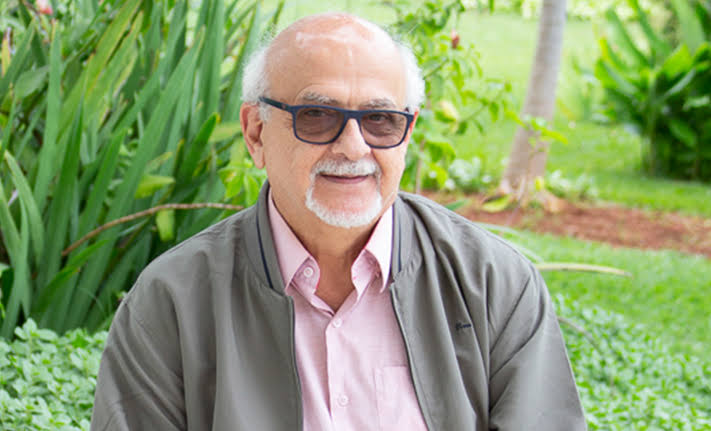
To deepen this debate, Ibirapitanga spoke with Renato Maluf, an economist and professor at CPDA/UFRRJ — the Graduate Program in Social Sciences in Development, Agriculture and Society at the Federal Rural University of Rio de Janeiro — and one of the leading references in the field of Food and Nutrition Sovereignty and Security in Brazil, with decades of work alongside Consea (the National Council for Food and Nutrition Security) and FBSSAN (the Brazilian Forum for Food and Nutrition Sovereignty and Security). In this interview, he traces the democratic construction of Brazilian food policy through social participation, analyzes the place of the food issue in the 2026 electoral race, and discusses the book he is preparing on food and politics in Brazil.
Instituto Ibirapitanga: Brazil has been the birthplace of a series of internationally recognized public food policies, a process marked by the development of initiatives and policy advocacy through the social participation of civil society movements and organizations. Looking at the Brazilian experience, how does the food systems field inform the construction of democracy in the country?
Renato Maluf: I have been using a category — the field of Food and Nutrition Sovereignty and Security and the Human Right to Food — to refer to a broad and diverse set of social actors that emerged and evolved over the course of the 1990s in Brazil, later playing a very important role in the construction of the Lula government, the Zero Hunger Program, and other public policies from 2003 onward.
It is fair to say that this broad social field, involving different profiles of actors, led the process of socially constructing a conception of Food and Nutrition Sovereignty and Security and the Human Right to Adequate Food that was distinct from and counter-hegemonic to the dominant conceptions in the country — especially those sponsored by agribusiness and the food industry. This was a fundamental contribution of this social field, initially led by FBSSAN — the Brazilian Forum for Food and Nutrition Sovereignty and Security, now with 25 years of continuous existence — which progressively incorporated organizations and networks from the most varied social sectors.
During the first two Lula administrations (2003–2006 and 2007–2010) and the Dilma administrations (2011–2014 and 2015–2016), this set of actors, mainly gathered within Consea — the National Council for Food and Nutrition Security — continued to play an active role in building public policies for which Brazil became widely known as an exemplary case. President Lula’s political decision at the time to place the fight against hunger and the promotion of food security as priorities of his government was accompanied by decisive civil society participation.
This activity was a product of Brazil’s redemocratization. It emerged with the end of the military dictatorship, alongside social mobilizations of various kinds, such as the citizenship campaign known as the “Betinho Campaign” in the early 1990s.
“When democracy was compromised again, as happened with the 2016 coup and the political situation that followed, Brazil returned to the Hunger Map.”
In these contexts, the institutional activity of civil society actors mobilized in the food field — and of Consea itself — was undermined, directly affecting the possibilities for diverse opinions and proposals to emerge. Nevertheless, other forms of social mobilization and action at the state and municipal levels continued. So it’s fair to say that the widest range of social actors in this field, including public administrators, have played and continue to play a very important role in Brazilian democracy through social participation in public policy. This is concrete testimony to the contribution of these actors to Brazilian democracy and, in turn, to society itself.
Instituto Ibirapitanga: Efforts to combat food insecurity remain very present on the agenda of the current Lula government, now in its third term. After the Bolsonaro administration, the hunger issue once again became central to the 2022 electoral narratives, due to Brazil’s return to the Hunger Map, as you mentioned in this historical overview. Considering the political landscape of the 2026 elections, which reflects the challenges Brazilian democracy has been facing, what is the role of the food issue and which related agendas should take center stage? What are you observing?
Renato Maluf: The food issue, in its various dimensions, will continue to have an important presence on the country’s public agenda. The group gathered around the far right has already shown what it does when in power, and we have every reason to expect they would do the same, or more intensely, should they win the election. Within a broader concern about inequalities and social injustices — hunger among them — the food justice movements will obviously be under threat depending on the election results.
I am not saying these movements will cease to exist. That wasn’t the case under the Bolsonaro government, when Brazilian civil society remained mobilized. Even with the shutdown of Consea, the retraction of much of the programming, and the absence of dialogue with the federal government, many state governments preserved the work of their councils, and society found ways to mobilize.
For example, the 6th National Conference on Food and Nutrition Security, which was supposed to take place in 2019, was cancelled. In response, civil society organized the Popular, Democratic and Autonomous National Conference for Food and Nutrition Sovereignty and Security, with various activities between 2019 and 2021, including plenary sessions and the organization of “banquetaços” [public banquet-protests] in major Brazilian cities, which drew significant attention. The third Lula government, which began in 2023, managed within two years to reverse the country’s situation, taking Brazil off the Hunger Map once again. One factor explaining this is that as soon as the food issue was restored as a priority and civil society was called upon, it was ready to respond positively.
“What we are witnessing is a contest in which the food issue will be present, even if it doesn’t always appear as such in public statements. The far-right candidates say nothing about the topic. I believe President Lula, who is running for reelection, will keep this issue on his agenda and in his government platform. We hope that happens, advancing the vision on the food issue.”
Instituto Ibirapitanga: And what do you think needs to move forward?
Renato Maluf: While we should celebrate Brazil’s exit from the Hunger Map, we must always say that it is a disgrace for Brazilian society and for the governments that allowed the country to fall into that situation in the first place. When we exited again, many of us said that, despite the good news, the debate on the food issue cannot be limited to whether or not the country is on the Hunger Map.
Even in the moments when Brazil showed its best food security indicators, between 3% and 5% of the population still experienced severe food insecurity — that is, hunger. It is a challenge to reach what we might call the hard core of extreme poverty and hunger, requiring instruments, methods, and differentiated strategies for population groups that are harder to identify and reach, living in extremely precarious circumstances.
Another point is that, even with the exit from the Hunger Map, a very large share of the population — more than 100 million people — experiences other manifestations of food insecurity. This means there is a broad field of necessary action regarding the low quality of food and the financial constraints that prevent adequate nutrition, even in situations where hunger, strictly speaking, is not present.
Finally, a related issue is that there are very clear indicators that Brazil is also seeing a global trend of rising obesity and diet-related chronic non-communicable diseases. One of the determinants of this is the consumption of ultra-processed foods. There is a set of challenges to be addressed regarding the regulation of advertising and the promotion of healthy consumption habits, as Brazil did with the Dietary Guidelines for the Brazilian Population, which had major national and international impact.
Instituto Ibirapitanga: The idea that “eating is a political act” has been strengthened for decades by organized civil society. Today, whether through production or consumption, the food issue has become central to efforts addressing the climate crisis. If the notion that eating is a political act was already true in previous decades, this becomes ever more evident in today’s context of climate crisis — one of the greatest global challenges, affecting everything from people’s lives to the health of the planet. How does food, in its political dimension, position itself within the broader debate on climate?
Food systems are at the center of the global debate, because they encapsulate the main crises humanity faces: social inequality, environmental sustainability problems, human health linked to habits that result from an unsustainable food system, and climate change. In our case, Brazil is not a major greenhouse gas emitter, but the emissions the country does produce come mainly from activities related to food systems, whether from extensive livestock farming, deforestation, or burning. That is the first connection — the hegemonic organization of food systems is among the causes of climate change, while at the same time various food systems suffer the effects of climate change on food production. The second aspect is that the social actors organizing around the connections between food and climate very often work at the intersection of climate justice, food justice, and social justice.
There is also a behavior known as civic or conscious consumption, which takes several factors into account. The first is consumption that contributes to a healthy life. This means not eating products originating from production methods with excessive use of pesticides, chemicals, and poisons, and not consuming ultra-processed foods. This already has an effect on how the food system is organized, and therefore on the climate issue. Another factor is precisely the concern with the environmental implications of one’s consumption pattern. As awareness campaigns about climate issues develop, people can better connect their purchasing and consumption habits to their repercussions in terms of greenhouse gas emissions and climate change.
Political consumption in the case of food, also called food activism, is very important and growing. It certainly has a role to play, but the weight of driving the necessary transformations should not be placed on consumers’ shoulders alone, letting companies off the hook.
“This dimension of political consumption feeds social movements, but one shouldn’t assume the main answer comes from there. Governments must be called to fulfill their role, so that they hold companies accountable above all.”
Instituto Ibirapitanga: You are preparing a book on food and politics in Brazil’s trajectory, a theme that has run through your research and teaching for decades. What drives you in this work, and what can we expect from it?
Renato Maluf: For some years now I’ve had a strong desire to reflect on the Brazilian trajectory and take a retrospective look at this experience, for two reasons: the first is that it is, in fact, an exemplary trajectory in many respects — not only for good reasons, but also for what it reveals about the difficulties, tensions, and conflicts inherent to Brazil’s social formation. The second reason is to reflect on something I took part in, not only as an academic but also as an activist for decades. I was closely involved in this collective construction.
“I want to make an assessment, but at the same time, stimulate a debate on how far we were able to go, what the reach of our experience was, and why it had the limits it had, what conflicts were generated. This retrospective look, while not committed to charting a future, helps us speculate about it — especially at moments when the country has to face decisions like now.”
What can be expected? I want to make it very clear that this is a personal reading. Of course I read documents and talk with people, but I hold no one responsible but myself for what is being written. I make no claim to neutrality, which I don’t believe in. It will not be a strictly academic book, even though I have my academic side and engage with some of the literature.
But it’s also not just a personal account. There’s a bit of critical thought in it, including revisiting what I thought in the past. Lastly, I also want to foster a discussion about what is required for this Brazilian experience to be lasting.